Taleem Core Belief : Slides Are Selected, Not Edited
Taleem is built on a simple observation.
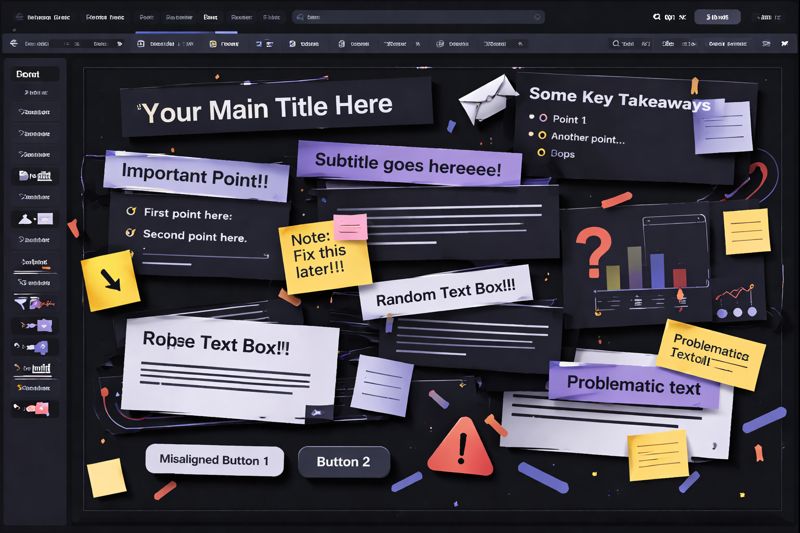
Most of the time spent making slides is not spent explaining ideas. It is spent adjusting layouts.
Text is moved slightly. Spacing is tweaked. Fonts are resized. One slide is fixed — another breaks.
Over time, effort shifts from teaching to editing.
Slides should be selected, not edited.
The Wrong Kind of Freedom

Traditional presentation tools give freedom at the wrong level.
You are free to move anything anywhere. You can resize, align, and tweak endlessly.
This feels powerful, but it has no natural stopping point.
Every small adjustment creates new combinations to manage. Consistency becomes fragile. Complexity grows silently.
A Different Approach
Taleem takes a different path.
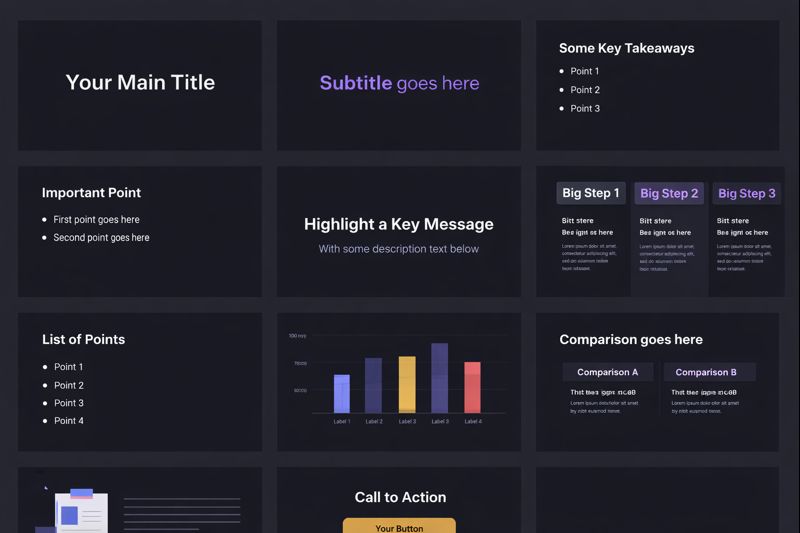
Instead of editing slides, you select slide types.
Each slide type represents a clear way of explaining something: a definition, a comparison, a diagram with text, a list next to an image.
The layout is fixed. The meaning is clear. You only provide the content.
The slide does not negotiate. It simply does its job.
Discrete vs Continuous Flexibility
Visual editors offer continuous flexibility.
Continuous flexibility has no boundaries. Every new option creates more edge cases.
Taleem chooses discrete flexibility instead.
A slide template is a discrete unit. It either exists or it does not.
Adding a new template is cheap. Existing content remains untouched.
Where Flexibility Lives
At first glance, this approach feels restrictive.
You cannot move text. You cannot tweak spacing. You cannot redesign slides on the fly.
But flexibility is not removed. It is relocated.
Instead of adjusting layouts, flexibility comes from adding new slide templates.
A new template does not break old lessons. It does not require migration. It does not increase system fragility.
The goal is clear: more patterns, not more knobs.